36 — Work
Digital smile design: what a preview can—and cannot—show
A design can make proposed visible changes easier to discuss; it cannot diagnose disease or promise the final smile.
Original editorial concept · temporary
What it is
Digital smile design is a planning and communication workflow, not a diagnosis, one standardized treatment, or an outcome. It is not one software product or system. Depending on the question, it may combine photographs or video, surface scans or impressions, digital measurements, a virtual proposal, a diagnostic wax-up, and an intraoral mock-up. These records can help patient, dentist, and laboratory discuss proposed visible contours. They do not replace a clinical examination, indicated imaging and tests, diagnosis, prognosis, reasonable alternatives, procedure-specific consent, or verification during treatment.
For
01
People considering a change in visible tooth color, position, shape, proportion, wear, spacing, or the relationship between teeth, lips, and gums.
02
Patients comparing no elective treatment, whitening, orthodontics, direct composite, reshaping, periodontal care, ceramic veneers or crowns, and interdisciplinary combinations.
03
People who have seen a photograph, simulation, wax-up, or mock-up and want to know what that preview represents before approving irreversible care.
04
Patients arriving through a full-mouth-reconstruction topic who need to know that a smile-design consultation does not mean every tooth—or any tooth—requires treatment.
01 — Begin with the concern, not a template
The patient identifies what looks or feels concerning and what should remain unchanged. Preferences are personal; a software proportion, symmetry rule, or clinician opinion is not a universal ideal.
02 — Diagnose before designing treatment
History, examination, periodontal and dental findings, photographs, and indicated radiographs, scans, vitality, occlusal, or functional records establish health, cause, prognosis, and constraints. A surface image alone cannot do that work.
03 — Build a proposal from declared records
A two-dimensional overlay or three-dimensional model may explore visible tooth position, length, width, contour, arrangement, and relation to the lips and face. Capture, alignment, design, fabrication, and transfer each introduce uncertainty.
04 — Translate the idea when useful
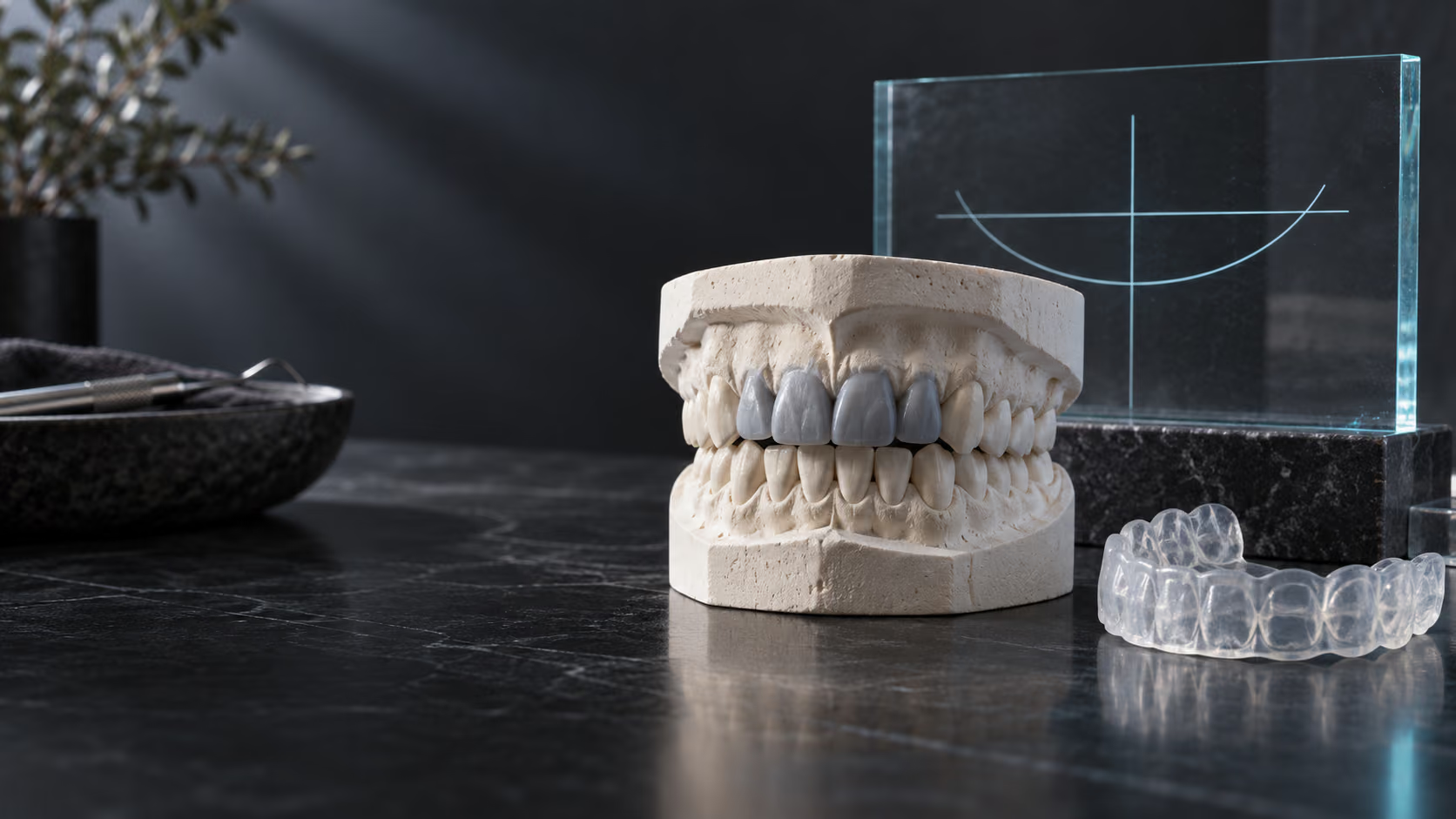
A diagnostic wax-up models proposed contours. An intraoral mock-up temporarily transfers added contours so appearance—and in selected cases speech, feel, and contacts—can be discussed before definitive treatment.
05 — Compare the least irreversible paths
No elective treatment, monitoring, whitening, orthodontic movement, additive composite, reshaping, periodontal treatment, ceramic restoration, and combinations solve different problems. The preview must not choose among them before diagnosis.
06 — Consent to the treatment, not the picture
Each selected procedure needs its own benefits, material risks, limitations, alternatives, maintenance, cost, and future-replacement discussion. Approving a simulation or mock-up is not informed consent for tooth preparation, surgery, orthodontics, or restoration.
07 — Verify every transfer and outcome
Provisional and definitive stages are checked against biology, tooth structure, tissue response, shade, phonetics, comfort, function, and cleanability. Revision, repair, maintenance, or a different plan may still be needed.
Independent digital smile-design guide
The most useful preview explains its limits
A responsible design conversation names which records were used, what is simulated, how the proposal may be tested, what remains unknown, and which treatment choices are still open.
Digital smile design is a category, not one protocol
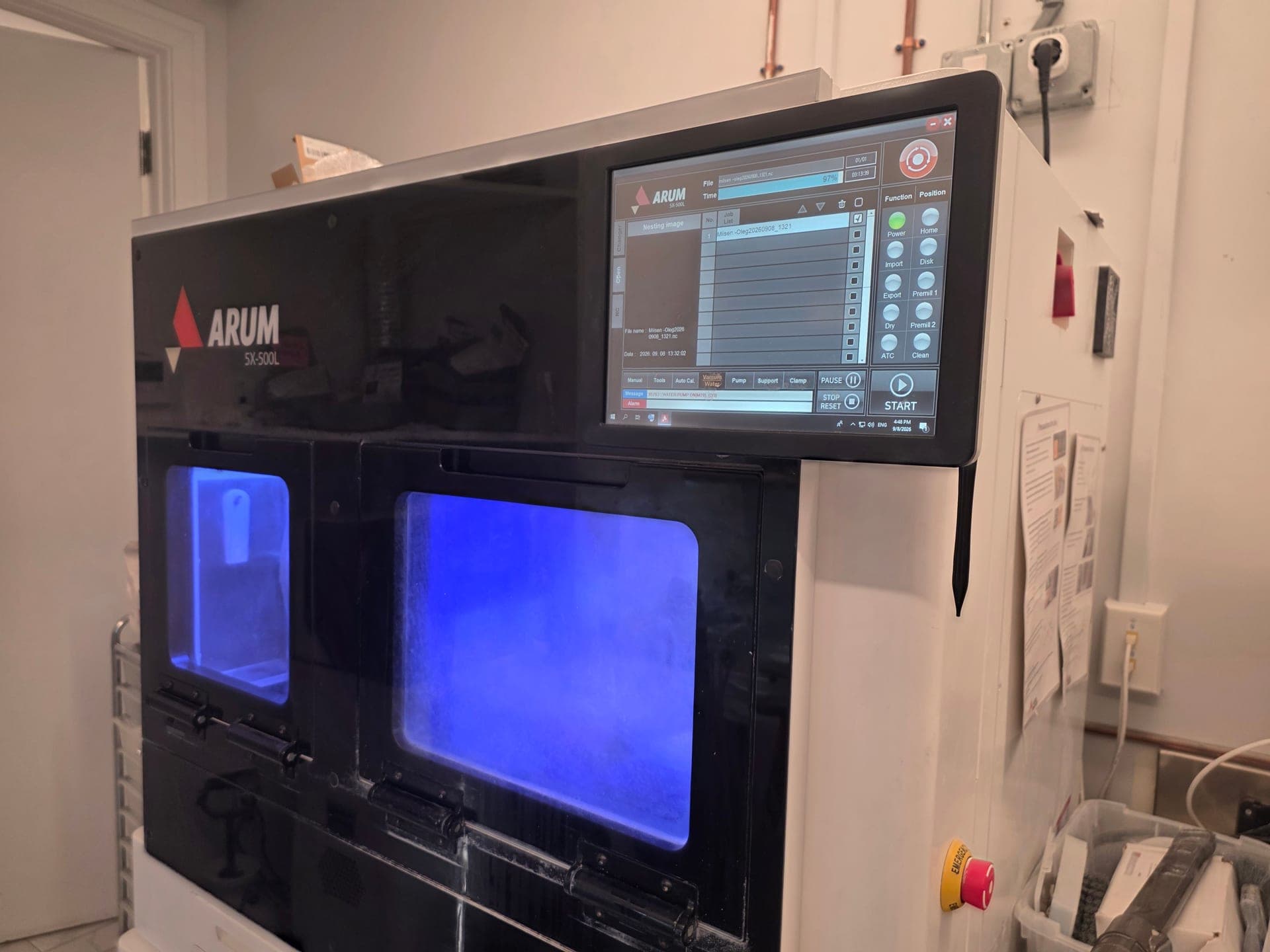
The term can describe simple two-dimensional lines drawn over photographs, three-dimensional tooth arrangements, a digital wax-up, facial-scan alignment, printed or milled models, mock-ups, surgical or preparation guides, and interdisciplinary communication. Different systems use different inputs, reference planes, software, operators, fabrication methods, and validation steps. The name alone does not establish accuracy or clinical value.
Aesthetic preference belongs to the patient
Visible tooth proportions, smile arc, gingival display, buccal corridors, symmetry, age characteristics, and surface texture are interpreted differently across people and cultures. The goal is not an algorithmic ideal. The proposal should record the patient's priorities and show alternatives without presenting one design as objectively perfect.
Photographs and video show different moments
Standardized photographs can record the face, lips, teeth, and selected reference lines at a captured instant. Video may add natural speech and movement. Camera position, lens, head posture, lighting, expression, scale, and calibration affect what is represented. Neither record reveals every biological or functional condition.
A surface scan is not a complete diagnosis
An intraoral scan or impression records accessible surface geometry. It does not by itself diagnose caries, cracks, pulpal or root disease, periodontal attachment and bone support, airway disease, temporomandibular disorders, or the cause of wear. History, clinical examination, periodontal charting, indicated radiographs and tests, and prognosis remain separate responsibilities.
A 2D proposal is a visual discussion layer
A two-dimensional design can explore apparent tooth length, width, position, symmetry, and relation to the lips in a photograph. It cannot directly reproduce depth, hidden surfaces, material thickness, tissue removal, orthodontic movement, jaw movement, or the final optical behavior of a restoration. It is a proposal—not a diagnostic result or manufacturing guarantee.
A 3D proposal adds geometry, not certainty
A three-dimensional design can combine surface data and proposed contours, but accuracy depends on every acquisition, alignment, design, fabrication, transfer, and verification step. Scanning accuracy is not whole-workflow accuracy. A statistically small deviation also does not automatically establish that a result will be clinically invisible or acceptable for a particular case.
The diagnostic wax-up models proposed contours
A diagnostic wax-up may be created manually or digitally and may help examine restorative space, tooth form, contacts, occlusion, and how a proposal could be transferred. A design that appears balanced on a cast can still conflict with the patient's lips, face, speech, bite, tissue, or expectations. It must be correlated to the person and the clinical diagnosis.
The intraoral mock-up is a temporary trial
A matrix may transfer additive wax-up contours into the mouth with provisional material. This can make appearance easier to discuss and may allow a brief assessment of speech, feel, and some contacts. The transfer is not an exact copy: material, matrix, seating, existing tooth position, and finishing affect thickness and shape.
An additive mock-up cannot display every plan
A layer placed over existing teeth primarily demonstrates added contour. It cannot by itself reproduce enamel or restoration removal, orthodontic movement, healed gingival or bone position, final shade masking, or the space created during preparation. Prominent, crowded, rotated, dark, or heavily restored teeth can make a purely additive preview bulky or misleading.
Mock-up, provisional, and definitive restoration are different
A mock-up is a short diagnostic and communication trial. A provisional restoration may protect prepared teeth and test parts of a treatment plan for longer. A definitive restoration uses different materials, fabrication, bonding or cementation, finishing, and maintenance requirements. Success at one stage does not guarantee the next.
A preview cannot guarantee the final appearance
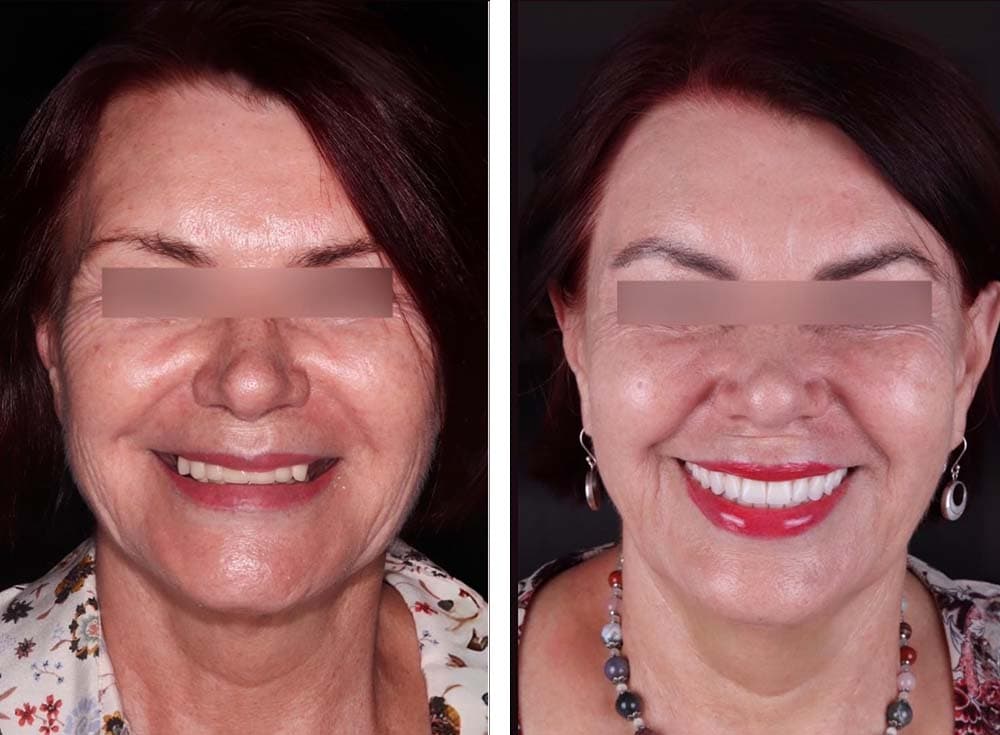
Digital or physical previews cannot guarantee final shade, translucency, fluorescence, texture, surface reflection, emergence profile, lip support, or the way natural teeth and restorations respond under different light. Display calibration, provisional material, underlying tooth color, preparation depth, laboratory work, and tissue conditions can all change what is seen.
A preview cannot guarantee biology or function
A proposal cannot guarantee tissue response, healing, speech, comfort, bite, chewing, temporomandibular-joint response, wear, fracture resistance, maintenance needs, or longevity. Those outcomes depend on diagnosis, treatment selection and execution, material and substrate, patient factors, habits, follow-up, and events that a simulation cannot forecast.
The directory name does not prescribe full-mouth care
Digital smile design does not require full-mouth rehabilitation, treatment of every tooth, extensive tooth reduction, or any irreversible procedure. Scope follows diagnosis and the patient's goals. A limited change, orthodontic or periodontal care, monitoring, no elective treatment, or referral may be the responsible conclusion.
Alternatives solve different problems
Whitening changes the color of eligible natural teeth but does not reposition teeth or whiten existing restorations. Orthodontics moves teeth and requires retention. Direct composite can add or reshape material and may be repairable, while wear, staining, chipping, and maintenance remain possible. Ceramic veneers or crowns involve different preparation, bonding, biological, fracture, and replacement considerations. Reshaping and periodontal treatment change different tissues. No option is universally least invasive or best.
Health and prognosis can change or stop the plan
Active caries, periodontal inflammation or attachment loss, cracks, erosion, wear, pulpal or endodontic disease, insufficient enamel, unstable occlusion, parafunction, airway or medical factors, and unrealistic expectations may require treatment, monitoring, modification, referral, or postponement before elective design-driven care. A beautiful proposal is not evidence that the teeth and tissues can support it.
Every downstream procedure has separate risks
Whitening can cause sensitivity or gingival irritation. Orthodontic treatment can involve discomfort, decalcification, periodontal effects, root resorption, prolonged treatment, and relapse. Composite may stain, wear, chip, debond, or need repair. Tooth preparation and ceramic restoration may be irreversible and can involve sensitivity, pulpal or periodontal complications, caries, debonding, chipping, fracture, repair, remake, and replacement. Periodontal procedures have their own healing and recession considerations. The applicable risks and frequencies are patient- and procedure-specific.
Approving an image is not informed consent
Consent requires a clinician to explain the diagnosed conditions, proposed treatment, expected benefits, material risks, reasonable alternatives including no treatment, likely maintenance and replacement, uncertainties, and who is responsible. The patient must have time to ask questions and may change a preference. A software checkbox, signed picture, or favorable reaction to a mock-up cannot substitute for that conversation.
Facial and dental data need explicit stewardship
Patient photographs, video, scans, radiographs, facial geometry, design files, messages, and manufactured models can be identifiable health information. The practice should explain why each record is collected, who can access it, which laboratory or software vendors receive it, how remote or artificial-intelligence services are used, privacy, storage and sharing rules, retention and deletion, security, and whether separate consent is needed for teaching, marketing, or publication.
Urgent disease is not a smile-design problem
Severe or rapidly worsening pain, facial swelling, fever with dental symptoms, trauma, uncontrolled bleeding, difficulty swallowing or breathing, or suspicious oral changes require prompt clinical triage rather than an aesthetic simulation. Call 911 or go to the nearest emergency department for a life-threatening emergency. A website concierge is not an emergency service.
This guide does not establish a TetriSmile service
This page independently explains a retained legacy topic. It does not prove that TetriSmile offers digital smile design, uses any named software, scanner, facial camera, printer, mill, in-house laboratory workflow, or artificial-intelligence system, or that a particular clinician is trained or authorized to provide a related procedure. Availability, location, responsibility, privacy terms, visits, timing, fees, insurance, warranty, and outcomes require current primary practice records and signed clinical, laboratory, operations, privacy, editorial, and legal review before indexed publication.
Continue the evaluation
Clinical reading
General information only. Diagnosis, treatment, risks, alternatives, and expected recovery are individual and require a clinical evaluation.
- Academy of Prosthodontics: Glossary of Prosthodontic Terms (2023) ↗
- American College of Prosthodontists: Parameters of Care (2020) ↗
- ADA: Types of consent ↗
- Simon and Magne: Diagnostic wax-up and mock-up ↗
- Sancho-Puchades et al.: CAD/CAM diagnostic mock-ups ↗
- Touati et al.: Communication tools and patient satisfaction scoping review ↗
- Moldovani et al.: Mock-up versus diagnostic wax-up accuracy ↗
- Caponi et al.: Diagnostic trial-restoration transfer methods ↗
- Pilot study: Conventional versus digital smile planning ↗
- Systematic review: Digital prosthodontic diagnostic applications ↗
- Systematic review: AI-based smile design and satisfaction ↗
- EFP: Stage IV periodontitis treatment guideline ↗
A useful smile-design process makes a proposed direction easier to inspect without confusing it with diagnosis, consent, treatment, or a guaranteed result. The responsible next step is the least irreversible option that fits the clinical findings and the patient's informed priorities. Until TetriSmile's current capability is verified, this remains independent education—not a service or outcome claim.