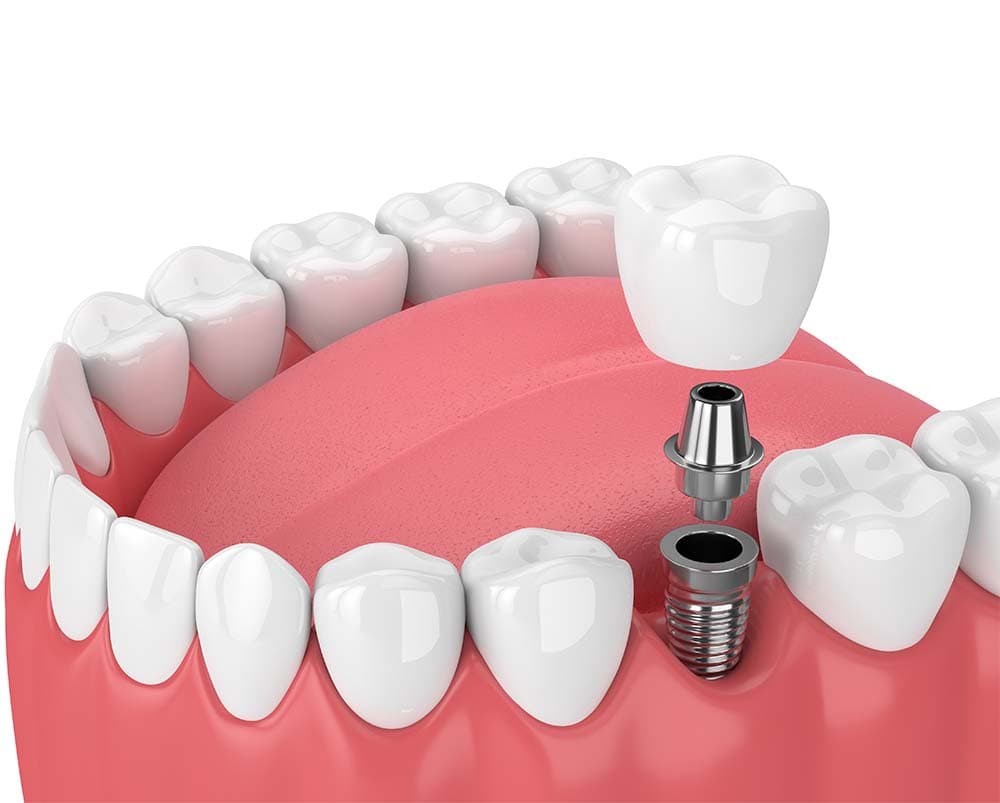
Patients often arrive having been told that the body rejected an implant. A dental implant is a titanium or ceramic device placed in bone. It is not a donor organ, and the ordinary immune rejection described in transplant medicine is not the usual explanation when an implant hurts, loosens, or is removed. Using that word can hide a more specific problem.
Early trouble is often a failure to integrate: the bone does not hold the implant still. Later trouble may be inflammation of the tissue around an implant that had been stable, a restoration that is loose or high, cement left under the gum, or a bite that overloads the crown. Smoking, hygiene, and some medical conditions can affect healing. They do not assign a personal percentage, and they do not decide a case without an examination.
The findings that should not be watched from home are increasing swelling, pus, a bad taste that keeps returning, pain that is worsening, or an implant or crown that moves. A settled ache in the first days after surgery is a different report from an implant that rocks. Those reports need the implant seen, and sometimes a radiograph, before anyone decides that it has failed.
Removal is sometimes the sound decision. So is treating the tissue and keeping the implant, or simply tightening or remaking a restoration that was the actual problem. The plan should say which of those is being proposed, and what would count as success over the next months. An implant that feels odd is a reason to be examined. It is not, by itself, a rejected implant.