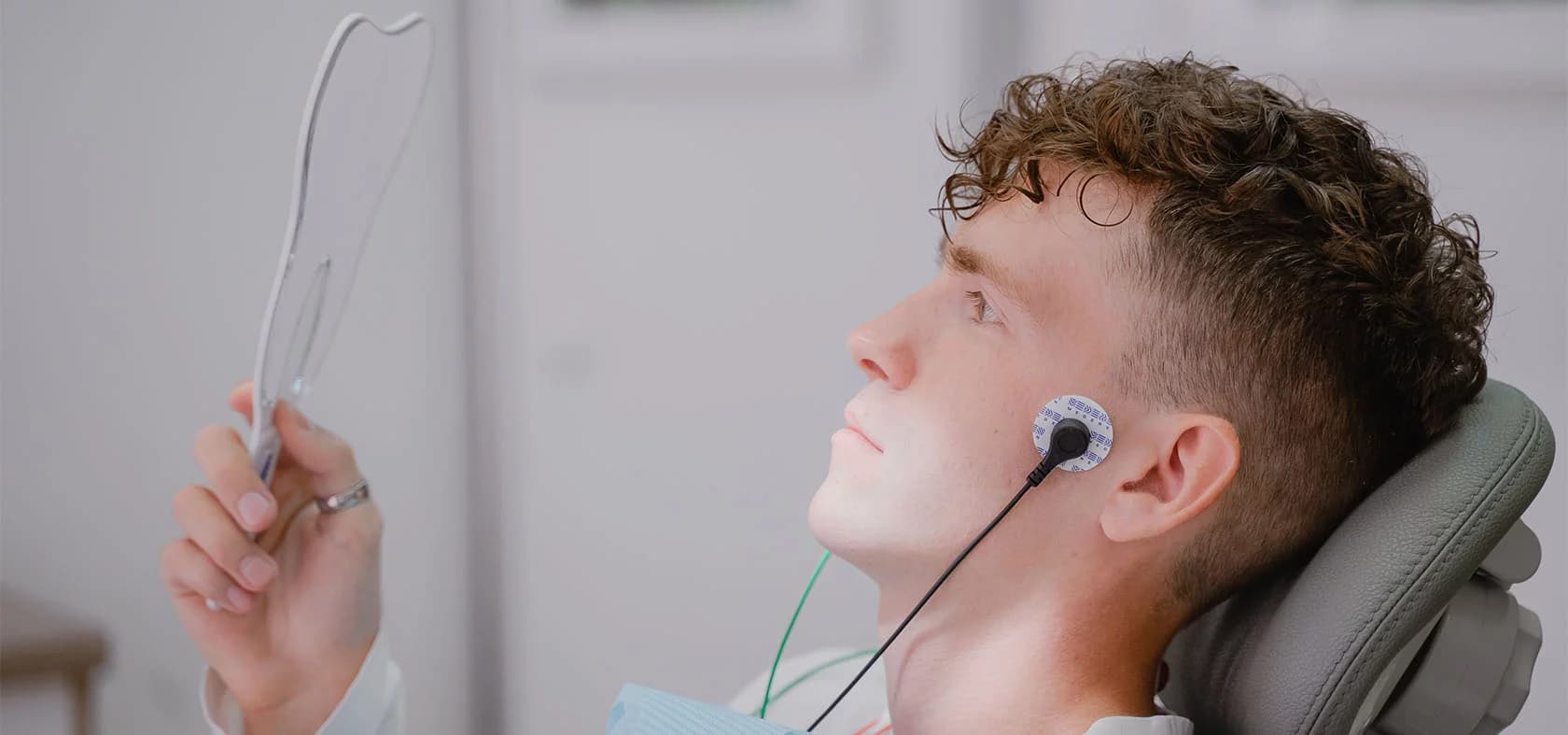
Jaw pain is a location, not a diagnosis. The same side of the face can hurt because a tooth is cracked, because the chewing muscles are overloaded, because the joint is inflamed, or because pain is referred from the neck or the sinuses. Clenching, a new filling that is high, and a long dental visit can all leave the jaw sore. They do not share one treatment.
The history matters more than a device. When did it start, does it hurt to chew or to open, is there locking or a click, and are there headaches or ear symptoms that travel with it? The examination looks at opening, the muscles, the joints, and the teeth, including whether a single tooth is the actual source. A night guard can protect teeth and sometimes reduce muscle load. It is not a diagnosis, and it does not prove that the bite was the cause.
Irreversible changes to the teeth are a poor first response to pain that has not been sorted. Adjusting enamel, placing crowns, or opening the bite to chase a jaw symptom can create a new problem if the pain was muscular, joint-related, or coming from one inflamed tooth. When a larger rehabilitation is already indicated for failed dentistry, a reversible appliance or provisional phase can test comfort before ceramic is made. The test can fail. That is the point of making it reversible.
Some jaw pain needs another clinician: physical therapy, a physician for headache or ear symptoms, or imaging when the examination raises a specific question. The longer essay on TMJ care in this journal is about that restraint. This one is the starting point. Name the source you can support, say what is still uncertain, and do not let a device outrun the findings.