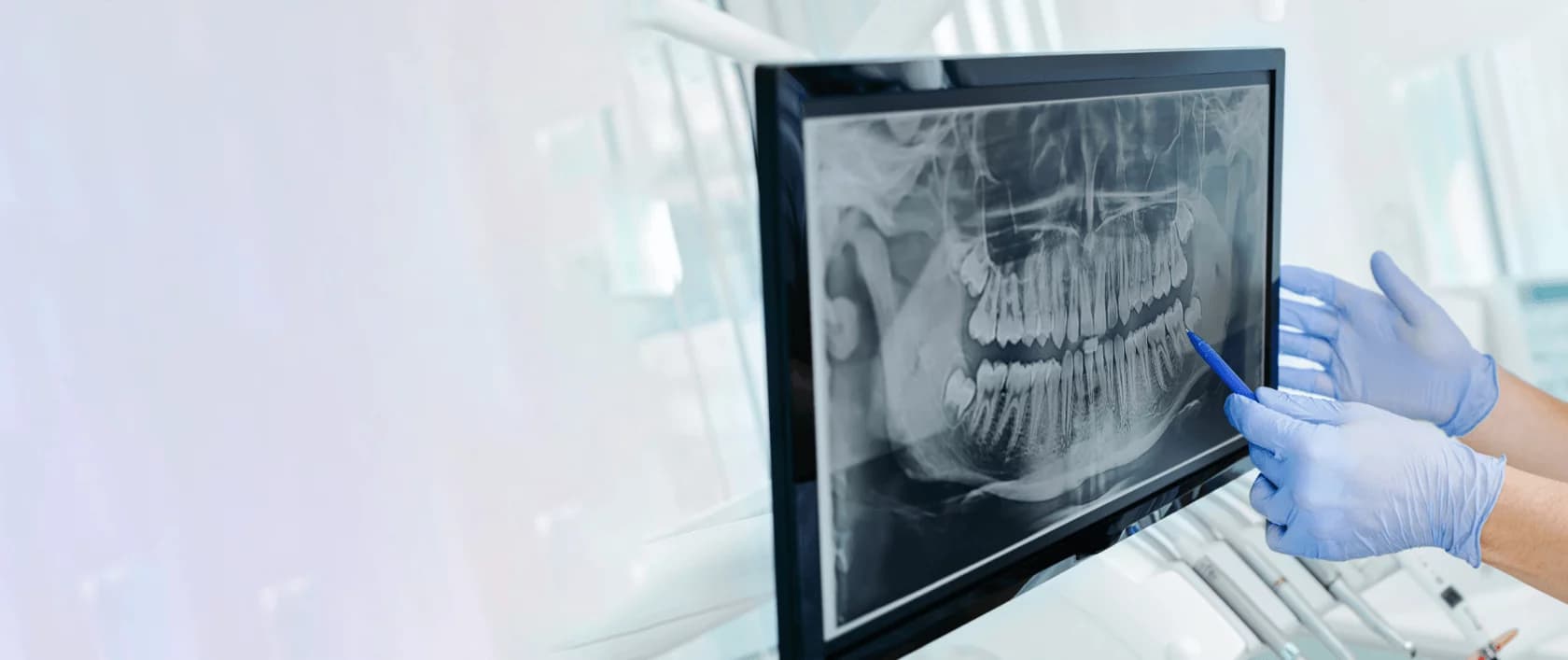
Dental radiographs use ionizing radiation. The dose from a small intraoral film is low beside many medical scans, and that comparison is not a reason to take one that will not change a decision. A radiograph is justified when there is a question it can answer: a painful tooth, a root, bone around a tooth or an implant, or a finding the examination cannot see. It is not a souvenir of a cleaning.
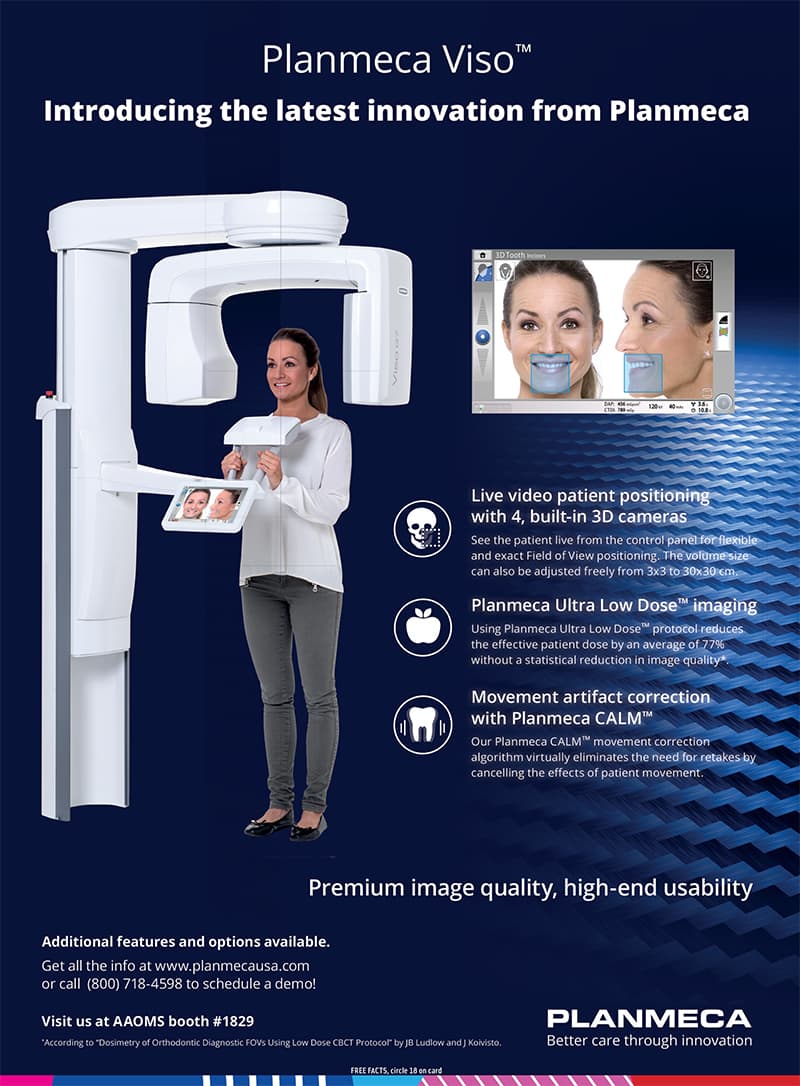
A three-dimensional scan sees more volume and costs more dose than a small dental film. The field should match the question. A larger picture is not a more careful picture. Motion, metal, and a field that includes anatomy nobody intended to treat all limit what the image means. The scan does not become a treatment plan because it is detailed.
Pregnancy, childhood, and a stack of recent images raise the threshold for what is worth taking. Existing radiographs from another office should be brought or requested before a new one is made. Shielding practices have changed over the years; the durable principle is not a particular apron. It is that the exposure is selected, limited, and explained.
If you are uneasy, ask which decision the image will change. If the answer is none, the image can wait. If the answer is a root, a fracture, or the bone for an implant, the exposure has a job. Refusing every radiograph can also leave a diagnosis incomplete. The adult conversation is which question is in front of you today, not whether radiation exists.