33 — Work
Piezocision-assisted orthodontics: evidence, limits, and surgical risks
A surgical orthodontic adjunct—not a shortcut or stand-alone treatment.
Original editorial concept · temporary
What it is
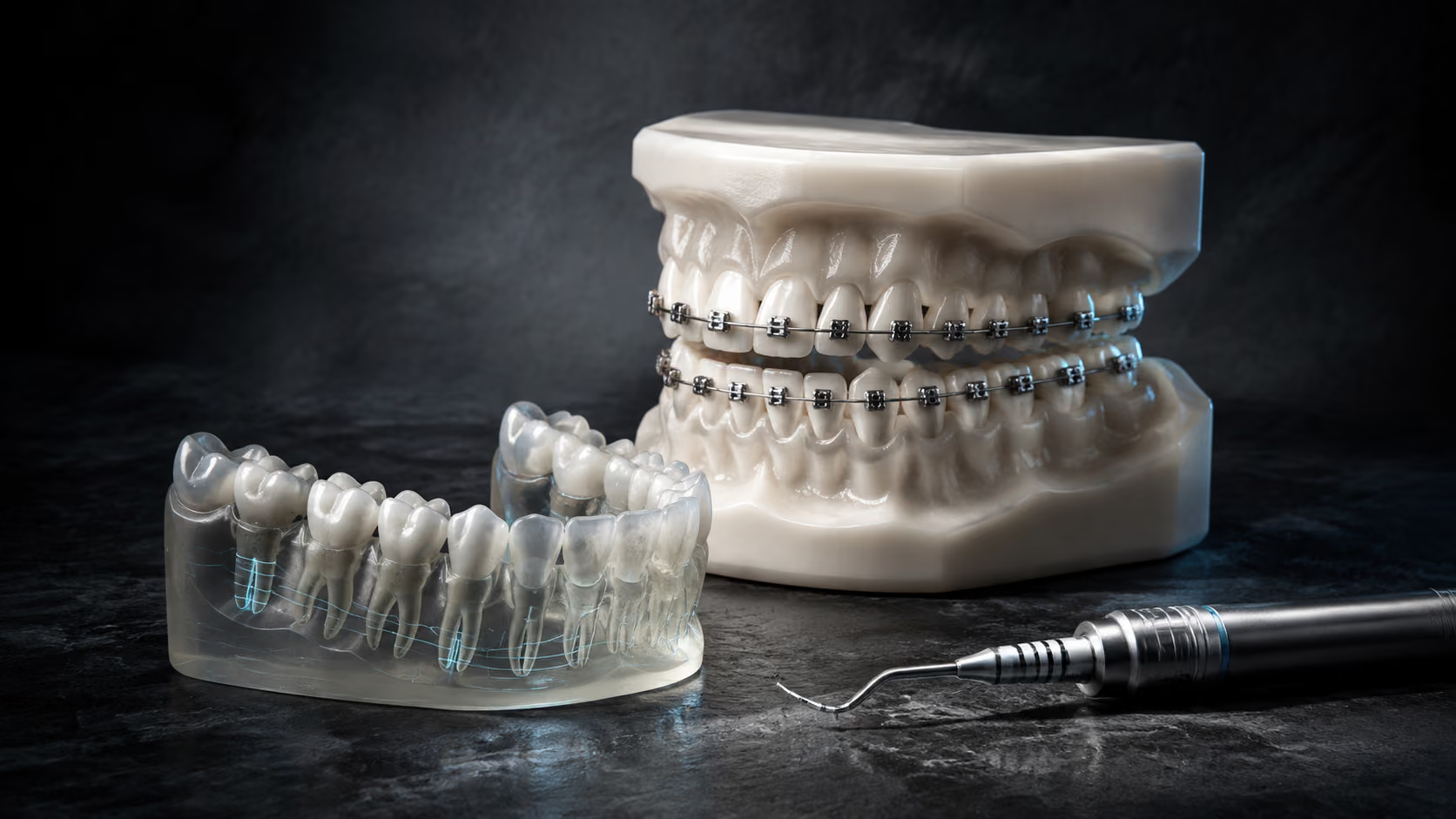
Piezocision is a technique used alongside active orthodontic treatment. Small gingival incisions provide access for a piezoelectric surgical instrument to make limited cuts in cortical bone; protocols, incision design, depth, suturing, and whether grafting is added vary. The orthodontic appliance and prescribed forces still move the teeth. Some trials report faster movement during selected phases, but the studies are small and heterogeneous, and they do not support a universal multiplier or a guaranteed finish date. A defensible plan starts with an orthodontic diagnosis, periodontal and root assessment, a defined surgical protocol, coordinated clinical ownership, and explicit consent for both ordinary orthodontic risks and the added operation.
For
01
Adults who have already been told that orthodontic tooth movement is appropriate and want to understand a proposed surgical adjunct.
02
Patients comparing conventional orthodontic timing with a Piezocision-assisted plan.
03
People who need the periodontal, root, bone, healing, and consent questions separated from marketing about speed.
04
Patients coordinating an orthodontist with a periodontist, oral surgeon, or other appropriately trained surgical clinician.
01 — Define the orthodontic objective first
Document the malocclusion, teeth to be moved, intended direction and distance, supporting bone and soft tissues, root form, oral hygiene, and the conventional plan. The surgery should answer a named orthodontic objective rather than substitute for diagnosis.
02 — Assess periodontal and medical suitability
Examine periodontal health and phenotype, recession, attachment, bone boundaries, inflammation, caries, endodontic concerns, smoking or nicotine exposure, medicines, bleeding risk, healing conditions, and other factors relevant to surgery. Stabilize active disease and obtain indicated consultations before elective treatment.
03 — Coordinate the procedure and consent
Identify who owns the orthodontic plan, who performs the surgery, the exact incision and cortical-cut protocol, whether sutures or grafting are proposed, the anesthesia plan, sterile workflow, aftercare, and responsibility for complications. Discuss reasonable non-surgical and surgical alternatives.
04 — Use anatomy-led surgical planning
The operator must plan around roots, cortical bone, gingival tissues, nerves, vessels, and adjacent structures. Imaging should be selected only when it answers a clinical question and when its expected benefit justifies radiation exposure; the label alone is not an indication for CBCT.
05 — Review healing before assuming acceleration
Follow the surgeon’s written instructions, attend early review, and report unexpected bleeding, swelling, pain, discharge, fever, numbness, or wound changes. Orthodontic activation and adjustment timing should follow the coordinated plan rather than a generic accelerated schedule.
06 — Monitor movement, tissues, roots, and retention
Continue hygiene and periodontal review while the orthodontic team checks movement, anchorage, vitality concerns, recession, attachment, root response, appliance effects, and patient-reported symptoms. Finishing standards and retention remain necessary even if one phase proceeds faster.
Surgically assisted orthodontics guide
Questions that should be answered before a Piezocision procedure
The useful question is not simply whether Piezocision can move teeth faster. It is whether a defined procedure adds enough likely benefit for this diagnosis to justify another operation, its uncertainties, and its recovery burden.
Piezocision is an adjunct, not an orthodontic treatment by itself
The term generally describes limited cortical bone cuts made through small gingival incisions with a piezoelectric surgical instrument. Braces or aligners, treatment planning, controlled forces, monitoring, finishing, and retention remain the orthodontic treatment. Surgery does not correct an unsuitable movement plan. FDA 510(k) K060274 records clearance of a Piezotome bone-cutting device for oral surgery; it is not FDA approval of Piezocision as a procedure and does not establish acceleration, candidacy, superiority, or local availability.
The name does not identify one universal protocol
Published protocols differ in incision placement, number and depth of cortical cuts, flap elevation, suturing, timing relative to orthodontic activation, and whether hard- or soft-tissue grafting is added. Consent should describe the procedure actually proposed, not rely on the label alone.
The intended biologic effect is temporary
The procedure is intended to provoke a local healing and bone-remodeling response that may temporarily facilitate tooth movement. The magnitude and duration of that response cannot be inferred for an individual from a diagram, device name, or a result reported in a different movement protocol.
Studies do not support a universal speed multiplier
Randomized trials and systematic reviews report mixed effects across alignment, canine retraction, incisor retraction, and total treatment time. Reviews describe small studies, different protocols, heterogeneity, and low or uncertain evidence for several outcomes. A percentage or “times faster” claim from one study is not a dependable personal forecast.
A faster phase is not always a shorter complete treatment
Initial alignment or a measured retraction interval is only one part of comprehensive care. Extractions, anchorage, bite correction, finishing, missed visits, broken appliances, biological response, refinements, and retention can determine the overall schedule. Ask which exact phase and endpoint a quoted time estimate describes.
Patient selection begins with a complete orthodontic diagnosis
Crowding alone is not enough. The team should document skeletal and dental relationships, root position, periodontal support, the movement envelope, restorations, endodontic history, oral hygiene, and treatment alternatives. A surgical adjunct cannot make movement outside safe anatomic boundaries automatically acceptable.
Periodontal health and phenotype matter
Thin facial tissues, recession, reduced attachment, dehiscence or fenestration, active inflammation, and the planned direction of tooth movement may change the risk-benefit discussion. Clinical examination comes first; any graft proposal is a separate tissue-management decision requiring its own rationale and consent.
Medical and healing factors require individualized review
The surgical clinician should review health conditions, allergies, pregnancy status when relevant, tobacco or nicotine use, medicines and supplements, prior healing problems, immune status, bleeding risk, and therapies that affect bone metabolism. A website cannot decide whether any one factor is a contraindication or how medication should be changed.
Imaging must answer a defined question
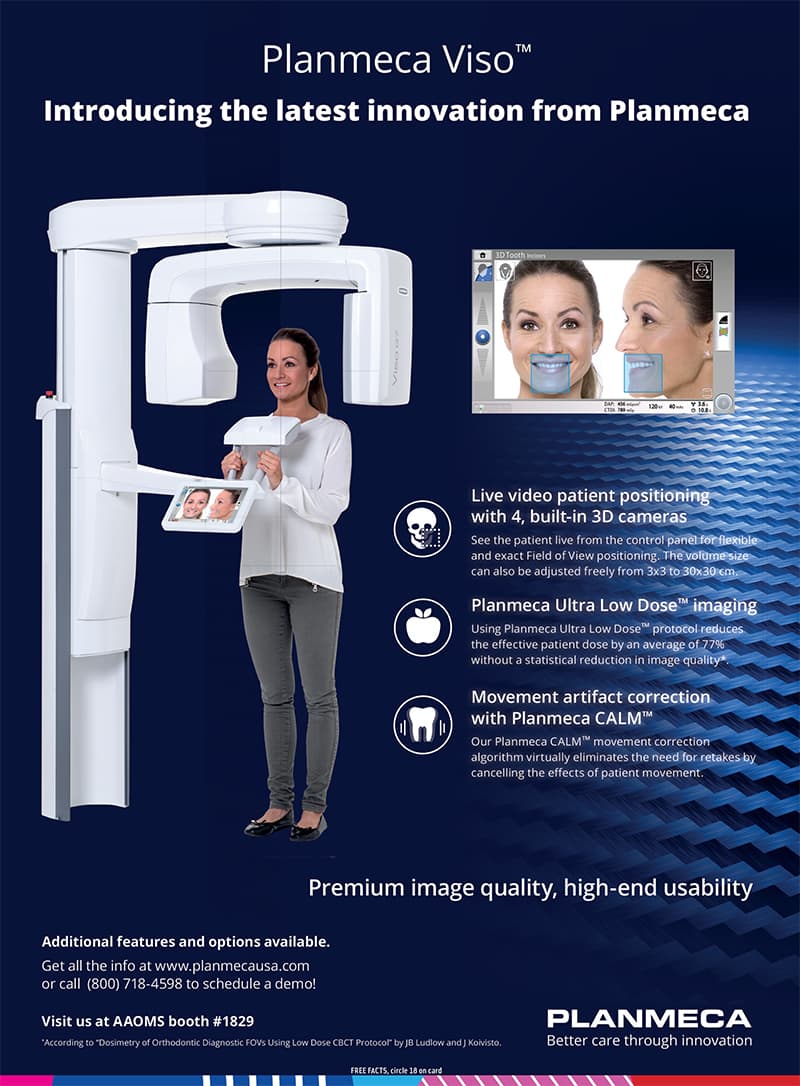
Existing photographs and dental radiographs may be sufficient for some decisions; other anatomy may require additional imaging. CBCT can show three-dimensional relationships but adds radiation and does not replace clinical examination. Use the smallest appropriate field and only when the result can affect the plan or reduce procedural risk.
Orthodontic and surgical responsibilities should be explicit
The orthodontic clinician owns tooth-movement goals, force systems, sequencing, and orthodontic monitoring. An appropriately trained and credentialed clinician owns the operation, anesthesia, sterile technique, surgical review, and management of surgical complications. The patient should know how the clinicians communicate and whom to contact after hours.
Bone or soft-tissue grafting is not implied by the name
Some clinicians combine corticotomy-type procedures with grafting; others do not. Graft material, donor source, objective, added incisions, healing, cost, and risks should be disclosed separately. Piezocision should not be presented as proof that grafting is necessary—or that grafting can always be avoided.
Anesthesia and medication instructions belong to the treating team
Local anesthesia is commonly discussed, but the actual plan depends on procedure extent, patient needs, clinician scope, and setting. Sedation, antibiotics, antiseptic rinses, and pain medicines are not automatic. Follow written instructions and do not stop or start prescribed medicines based on general web content.
Expected recovery and surgical risk are different questions
Tenderness, swelling, bruising, minor bleeding, and temporary diet or hygiene changes may occur after oral surgery. Possible complications include persistent bleeding, infection, delayed healing, wound opening, scarring, gingival recession, attachment or bone changes, damage to a root or nearby structure, altered sensation, and anesthesia- or medication-related events. Small incisions do not make the procedure risk-free.
Root, pulp, and periodontal safety evidence remains incomplete
Individual trials have monitored root length, pulp measures, gingival recession, pocket depth, bone height, and patient-reported pain. Systematic reviews have not established a consistent major harm signal, but study limitations and short follow-up prevent a promise of no root resorption, no vitality change, or no periodontal effect.
Ordinary orthodontic risks remain
Caries, enamel marks, gum inflammation, root resorption, unwanted movement, loss of anchorage, bite changes, relapse, appliance breakage, and the need for refinements or additional procedures remain possible. Faster observed movement does not remove the need for hygiene, force control, appointments, finishing, or retention.
Conventional orthodontics is a real alternative
Proceeding without an adjunctive operation may mean accepting the estimated conventional schedule. Other options can include changing mechanics or sequencing, revisiting the treatment objective, or considering another surgical or non-surgical adjunct. Micro-osteoperforation uses small perforations and is not the same protocol as Piezocision. Flap-based corticotomy—and periodontally accelerated osteogenic orthodontics (PAOO), which combines corticotomy with grafting—are broader operations. Their evidence and risks are not interchangeable. Each alternative needs its own evidence, risks, burden, and cost rather than a single speed comparison.
Timing, candidacy, price, and availability require local proof
Published averages cannot establish an individual finish date. A responsible estimate needs records and a defined orthodontic and surgical plan. Fees, clinician credentials, instruments, graft materials, anesthesia, follow-up, emergency coverage, and whether the procedure is offered at a particular location must be verified directly.
Know which symptoms need prompt or emergency help
Contact the treating surgical team promptly for bleeding that does not settle with instructed pressure, worsening pain or swelling after initial improvement, fever, pus or foul drainage, a wound opening, persistent numbness, an injured appliance, or any other unexpected change. Rapidly spreading swelling, difficulty breathing or swallowing, severe uncontrolled bleeding, fainting, or another life-threatening problem requires 911 or the nearest emergency department. A website or remote monitor is not an emergency service.
This guide does not establish a TetriSmile service
The page explains a retained legacy topic in neutral patient language. It does not show that TetriSmile offers Piezocision, owns a piezoelectric surgical unit, employs a qualified operator, uses a particular protocol, provides grafting or sedation, or has approved timing, price, outcomes, or Russian-language claims. Those facts require current practice evidence and clinical review before publication.
Continue the evaluation
Clinical reading
General information only. Diagnosis, treatment, risks, alternatives, and expected recovery are individual and require a clinical evaluation.
- Original technique description—definition only: Dibart et al. (2009) ↗
- FDA 510(k) K060274: Piezotome oral-surgery bone-cutting device clearance—not procedure approval ↗
- 2026 systematic review: Piezocision in extraction and non-extraction alignment (Al-Bitar et al.) ↗
- 2026 systematic review and RCT meta-analysis: Piezoelectric-assisted orthodontic treatment (Chen et al.) ↗
- Systematic review and meta-analysis: Effectiveness of Piezocision (2020) ↗
- Systematic review: Effects and possible adverse effects of Piezocision (2019) ↗
- Randomized trial: Piezocision with customized orthodontic appliances (2019) ↗
- Randomized trial: Piezocision during leveling and alignment (2022) ↗
- Randomized trial: Piezocision versus micro-osteoperforations (2021) ↗
- Randomized trial with a null retraction result: Piezocision and corticotomy (2021) ↗
- Systematic review: Adverse effects of surgically accelerated orthodontics (2022) ↗
- 2023 meta-epidemiological study: Harms reporting in surgically accelerated orthodontic trials ↗
- AAP best-evidence review: Periodontal phenotype modification and orthodontics (2020) ↗
- EFP S3 guideline: Stage IV periodontitis and coordinated orthodontic care (2022) ↗
- ADA/AAOMR clinical recommendations: Patient selection for dental radiography and CBCT (2026) ↗
A useful consultation should identify the exact movement goal, conventional alternative, expected absolute benefit, quality of the supporting evidence, responsible orthodontic and surgical clinicians, tissue and root safeguards, procedure-specific risks, recovery plan, and contingency if healing or movement differs from the estimate. Until those facts and TetriSmile’s current scope are verified, this is independent education—not a promise that the procedure is offered or appropriate.